Link 1
Landowners → revenue they can't reach alone
A single farm cannot contract a volumetric water benefit, or sell a verified nature outcome, or negotiate feedstock supply. Aggregated across enrolled acres, it can.


PrairieLink · A Roeslein Alternative Energy program · USDA AMP awardee
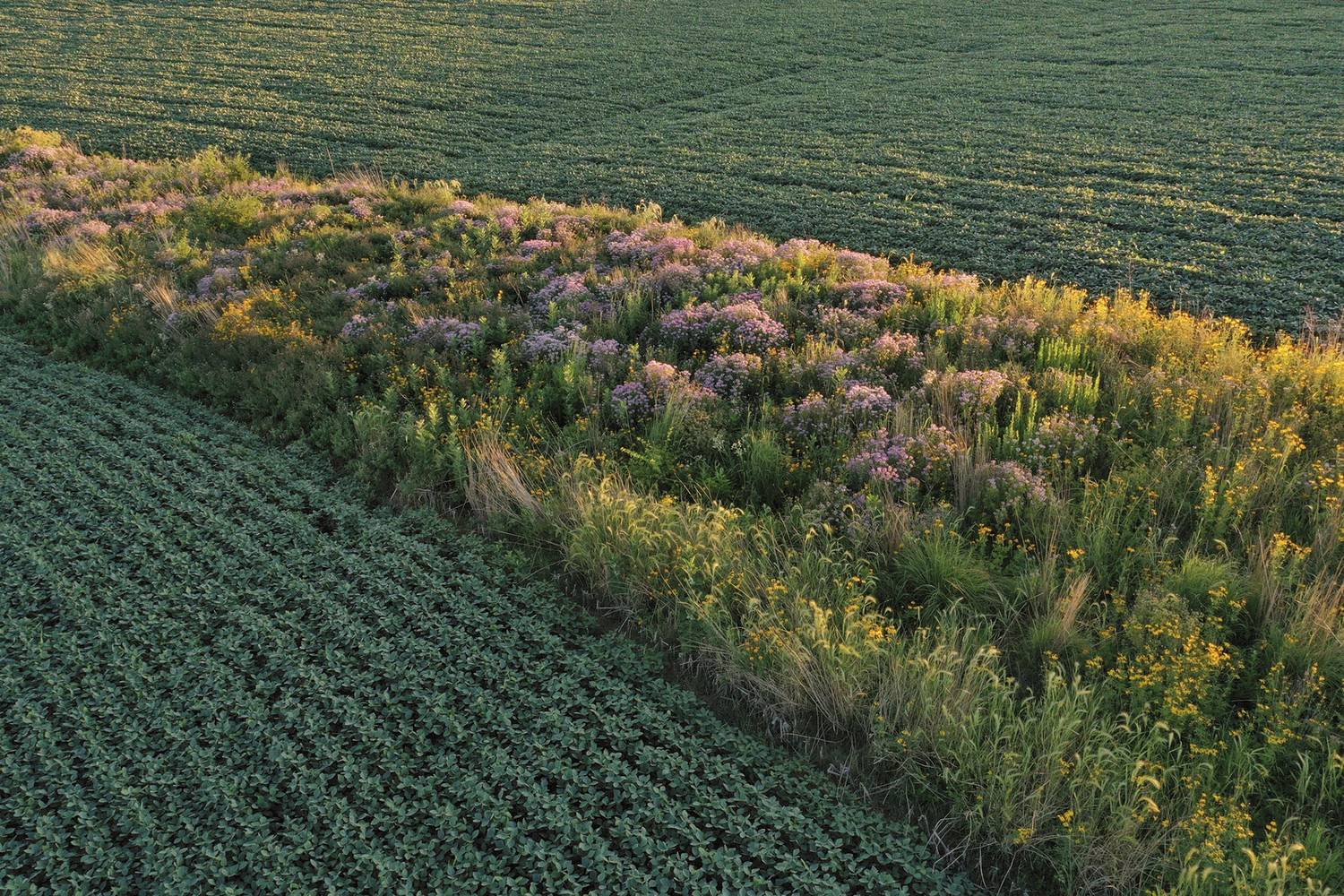
We integrate native prairie into working lands at no cost to the landowner — and link those acres to the markets that pay for them.
01 / The name is the model
PrairieLink restores prairie and opens the door to the markets that pay for it. That facilitation is the business — and it is the honest answer to why do you take a margin?
Link 1
A single farm cannot contract a volumetric water benefit, or sell a verified nature outcome, or negotiate feedstock supply. Aggregated across enrolled acres, it can.
Link 2
Companies with water replenishment, Scope 3 and nature targets need outcomes tied to specific ground, measured by third-party MRV partners. We put acres behind the commitment.
Link 3
Attribute and grass markets pay for the acres now. They also build the operating capacity that a prairie-to-RNG feedstock market will require later.
We fund the planting. The landowner manages the ground. Together we build the market — and PrairieLink is paid as a margin on the market revenue flowing back to the farm, not as a bill to the farm.
02 / What you are actually buying
The part of prairie that does the work is the part nobody photographs. Keep scrolling and we'll go down with it.
Perennial cover means the ground isn't disturbed year after year. Aggregate structure rebuilds. Organic matter accumulates. Topsoil stays where it is.
Open root channels and dense litter slow water down and move it into the profile instead of across it. Infiltration up, runoff down — and the nutrients that travel with runoff stay on the field.
This is the physical basis of a volumetric water benefit, the most mature attribute PrairieLink sells today.
Andropogon gerardii. The warm-season grass that gave the tallgrass prairie its name, and the backbone of most blends we plant.
Panicum virgatum. Dense, fibrous, and durable — forage in the growing season, and the standing biomass that a digester will eventually want.
Silphium laciniatum. One taproot, driven deeper than most farm buildings are tall. It takes years to get there — which is why establishment is measured in seasons, not weeks.
Everything downstream of this page — the water benefit, the carbon, the grazing, the hay, the feedstock — is sitting on the structure you just scrolled through.
03 / A menu, not a product
Water is the most mature market we work in today. It is not the business. The business is a growing menu of markets, so that each restored acre has a reason to stay in prairie after the grant money is gone.
Categories group into environmental attributes, physical grass, planting services, and — later — RNG feedstock. Pricing mechanics are shown as units and structures rather than quoted rates; rates are set per agreement.
04 / Where prairie goes
You can start with the acres that already underperform and keep farming the rest. For a landowner that lowers the barrier to entry. For a buyer it is how acreage scales — across many farms, not a handful of large conversions.
Same field. Different amounts of it.
05 / How an outcome becomes sellable
Establishing prairie creates a monetizable outcome relative to a counterfactual — what the same acres would have done under continued crop or pasture production. Everything a buyer purchases lives in that gap.
Source: Schulte et al., PNAS 114(42), 2017 — the Iowa State STRIPS experiment, in which 10% of a corn–soybean field was converted to native prairie strips. Reported as published results of that experiment, not as PrairieLink's own measurement. We cite it because it describes the mechanism our third‑party MRV partners measure on enrolled acres.
06 / Establishment
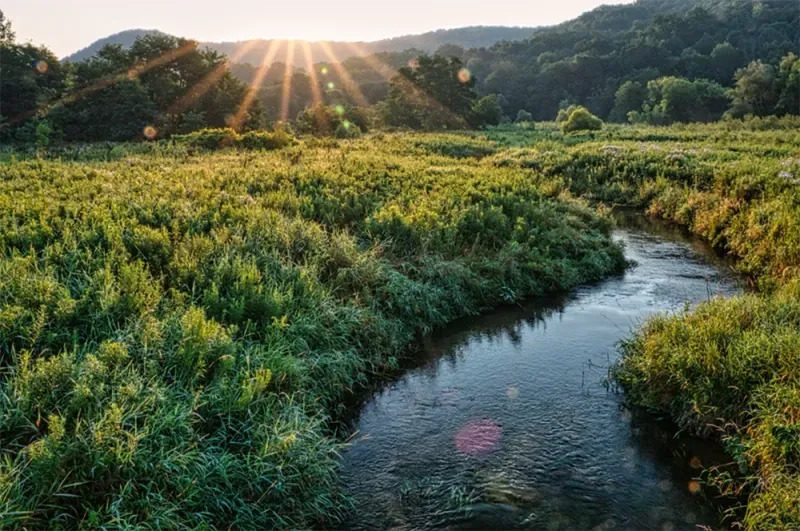
Establishment is not a fixed schedule. Drag the year to see what the stand is doing, what the landowner is doing, and what can be earned — as ranges, because ranges are the truth.
What moves these ranges
07 / For landowners and farmers
This is a partnership with obligations on both sides, not a giveaway and not a conservation grant. The up-front cost is covered so the transition is de-risked. The income comes from the markets the prairie attaches to.
PrairieLink brings
You bring
Together you get
The order is deliberate. Operators who depend on revenue from working land are the hardest to convince — and are therefore the real test of whether these markets work. If the economics hold for them, the economics hold.
08 / What's in the bag, what shows up
Seed mix quality is not where we cut cost. A stand that fails to establish or comes in thin is neither restoration nor a product anyone will buy.
Bloom windows — a blend is built so something is flowering from April through October
09 / The year on the ground
Biomass has to come off. That is agronomy, not preference. Grazing and haying revenue exist because the stand needs the work done anyway.
Indicative windows for an established warm‑season stand in the tallgrass region. Actual timing is set by stand maturity, species mix, nesting season, and the agreement the acres sit under.
10 / The long game
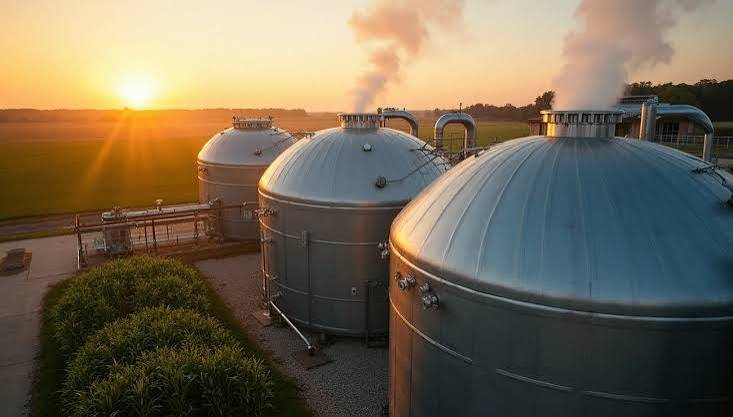
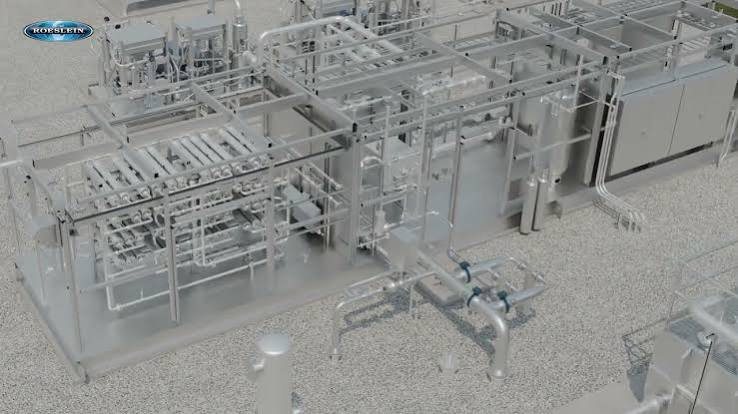
Our working theory is that prairie biomass is harvested in the dormant season and converted to renewable natural gas through anaerobic digestion. That is the strategic reason to build market capacity now — and it is where the engineering story belongs.
Headroom left in waste feedstocks
Regulatory and policy change needed to open RNG to prairie biomass
PrairieLink's own working estimate, not a forecast from a third party. The window is why attribute and grass markets are being built first: they keep acres in prairie until the feedstock market exists.
Mature stand, dormant season, after seed set and after nesting.
Cut, cure and bale on the same equipment that makes hay.
Staging, storage and haul radius — the constraint that decides whether an acre is in range.
Co-digestion with existing feedstocks; biomass pretreatment is the open engineering question.
Biogas cleaned to pipeline specification and injected.
A fertilizer product to develop alongside the gas.
A parallel thermal pathway we intend to explore.
D3 RINs for cellulosic biogas; the 45Z clean fuel production credit.
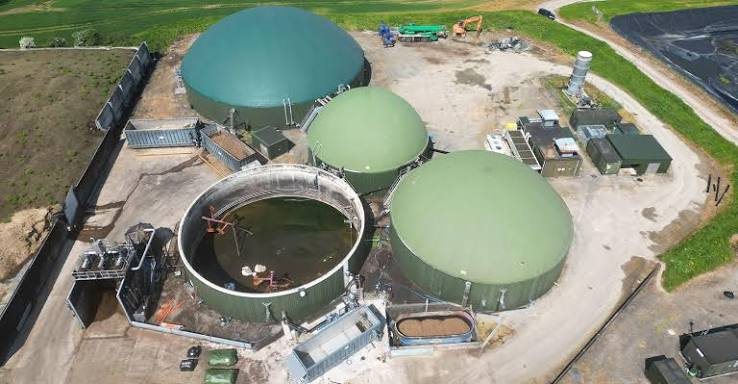
Not every restored acre is destined for a digester. Acres attach to the market that fits them — water, carbon, nature, grazing, hay, seed. Feedstock is one door among several, and it is the one that isn't open yet.
PrairieLink is operated by Roeslein Alternative Energy, which has run renewable natural gas projects for over a decade. That operating experience is why the feedstock question is one we are prepared to answer — and it is the only part of this program where the engineering story is the point. More about the team →
11 / Scale
The tallgrass ecoregion once ran from Manitoba to Texas. Most of it has been converted to other uses, and what remains is fragmented. Putting prairie back means putting pieces of it back — on thousands of fields, in the configurations each one can carry.
The ecoregion is the opportunity. The dots are what the opportunity actually looks like: edge-of-field practices and partial conversions spread across working farms, each one small, together large.
1 Samson & Knopf, BioScience 44(6), 1994. Ecoregion extent shown for orientation; it is not a map of enrolled acres.
12 / On the ground today
1 Estimated annual water replenishment based on modeled and calibrated project performance. 2 Average carbon sequestration rates for cropland set aside to native prairie grasses; DOI 10.1890/08-0649.1.
13 / Measurement, reporting, verification
Outcomes are modelled, measured and verified by third‑party MRV partners. To be exact about what that means: our partners verify outcomes. They do not guarantee a buyer's corporate goals, and verification is not assurance over a company's reporting.
Establish the counterfactual for the specific acres: prior land use, yields, soils, slope, drainage.
Project the outcome — volumetric water benefit, nutrient and sediment change, carbon, habitat condition.
Field and remote monitoring on enrolled acres to calibrate the model against what actually happened.
Third‑party review, then reporting a buyer can take into a water, Scope 3 or nature disclosure.
14 / For market partners
If your commitments are volumetric water replenishment, Scope 3, or nature and biodiversity targets, the question is not which label this sits under. It is what gets delivered, how it is measured, and on which ground.
Most conversations begin with a target: a replenishment volume, a sourcing region, a watershed, a reporting year. From there we work backwards to acres and configurations.
Start a conversation15 / Indicative screen
Answer five questions and we'll show which configurations and which markets are most likely to fit, and send it along with your note. This is an indicative screen, not an offer — a real assessment looks at the parcel.
Your result appears here
Example shown below is for 160 acres of row crop in north Missouri with eroding slopes and a waterway.
16 / Get in touch
Tell us which side you're coming from and roughly what you're working with. Someone from the land team or the markets team will pick it up.
About
PrairieLink is managed by Roeslein Alternative Energy as a Prairie‑to‑Markets program under a USDA AMP award. For the duration of the award, 65% of program spend goes directly to farmers. Within that constraint the work is to drive down the per‑acre cost of restoration until prairie competes with alternative land uses on its own terms — without cutting the seed mix to get there.
The team combines prairie establishment, agricultural markets, renewable natural gas engineering and applied research. Meet the team →